Кованые легкосплавные дискиБлагодаря своим преимуществам — высокой прочности и легкости конструкции — алюминиевые сплавы стали основным выбором для тюнинга автомобилей и создания премиальных моделей. Их исключительные характеристики обусловлены точным производственным процессом. От заготовок из необработанного алюминия до высококачественной готовой продукции — каждый этап скрывает в себе тайны мастерства. Ниже представлен краткий анализ ключевых этапов:
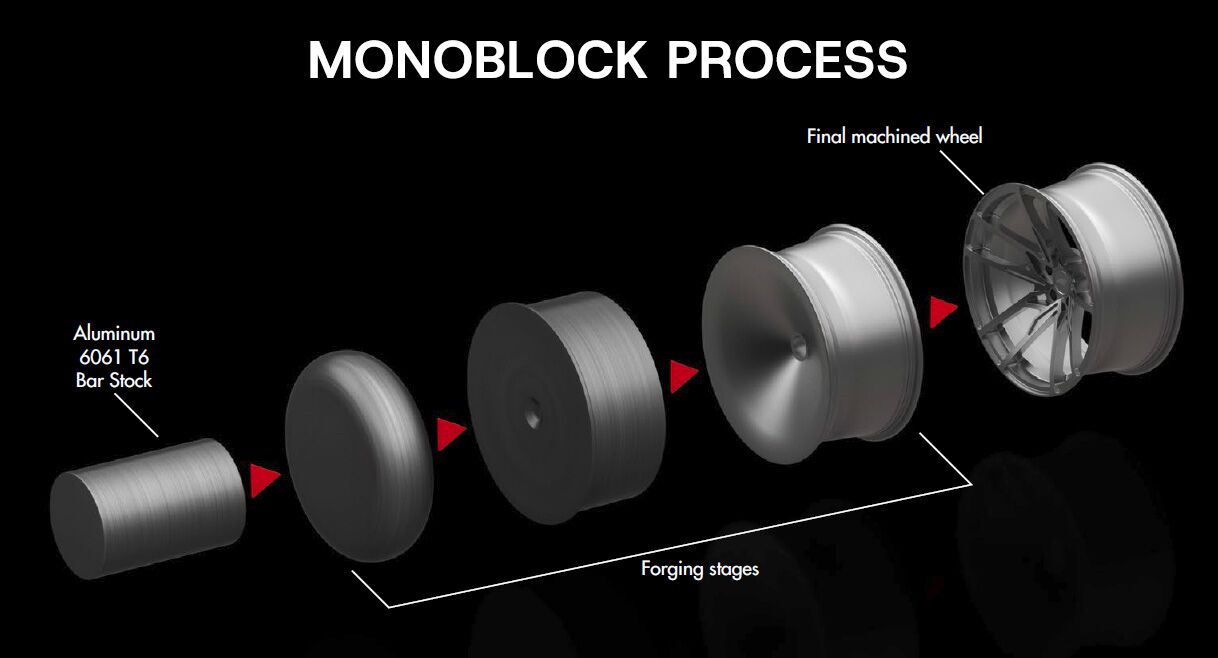
Подготовка сырья — краеугольный камень качества. Для изготовления кованых дисков специально отбираются слитки из алюминиевого сплава T6061-T6 аэрокосмического класса. Эти слитки плавят при температуре 700 °C, корректируют состав сплава, а затем отливают в цельные алюминиевые заготовки, которые подвергаются гомогенизации для устранения внутренних напряжений и обеспечения однородных свойств материала. Этот этап обеспечивает стабильный и надежный базовый материал для последующей ковки, являясь основной гарантией прочности диска.
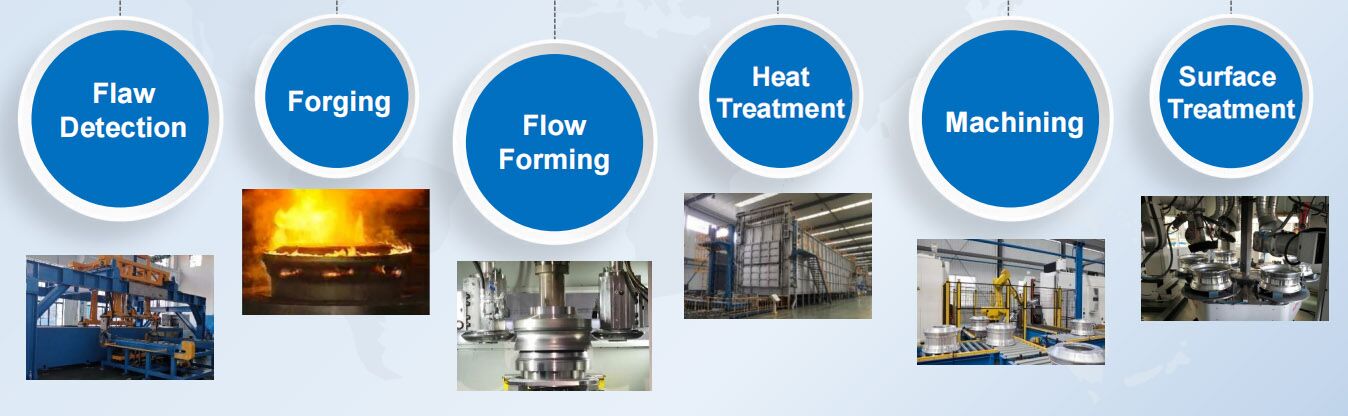
Ковка — это критически важный процесс. После резки алюминиевая заготовка нагревается до 400-500°C, сначала прессуется в диск на осадочном станке, затем предварительно формуется с помощью штампа для предварительной ковки и, наконец, куется до окончательной формы под многотонным гидравлическим прессом. Во время окончательной ковки металлические зерна образуют плотные линии потока, благодаря чему прочность колеса значительно превосходит прочность литых изделий. Долговечность кованые диски, изготовленные на заказ напрямую с завода. берёт начало в этом процессе.
Этап термообработки дополнительно повышает эксплуатационные характеристики. Заготовка колеса подвергается обработке раствором при 520°C, закалке в воде, а затем искусственному старению при 120°C в течение 8-12 часов, что значительно повышает твердость и прочность на растяжение, позволяя соответствовать сложным требованиям к нагрузкам, предъявляемым при эксплуатации транспортного средства.
Обработка на станках с ЧПУ обеспечивает точную подгонку. С помощью оборудования с ЧПУ обод обрабатывается на токарном станке, спицы фрезеруются, а отверстия для болтов обрабатываются с соблюдением допусков по размерам в пределах ±0,05 мм, что гарантирует динамическую балансировку и совместимость при установке. Последующая обработка поверхности сочетает в себе эстетику и защиту: после пескоструйной обработки и фосфатирования используются такие процессы, как порошковая покраска, электрофорез или вакуумное электролитическое покрытие, для создания различных цветов и текстур.
Наконец, наступает этап тщательного тестирования. Готовая продукция должна пройти рентгеновский контроль качества, динамическую балансировку, испытания на усталость при изгибе и другие проверки. Только 18-дюймовые облегченные кованые диски Те изделия, которые прошли все испытания и имеют указанные технические характеристики, могут быть отгружены.
Несмотря на оптимизацию процесса производства кованых дисков, он всегда соответствует основным стандартам «точности и прочности». Строгий контроль на каждом этапе, от сырья до готовой продукции, не только обеспечивает их превосходные характеристики, но и позволяет автовладельцам легче понять, что является залогом качества при выборе.
Hi! Click one of our members below to chat on